

Starting your day with intention can shape the mood and mindset for everything that follows.
Using simple mindfulness tools in the morning helps you feel calmer and more focused. This allows you to handle daily challenges with greater ease. These practices don’t require special skills. They don’t require much time either. This makes them accessible for anyone interested in creating a more peaceful routine.

You will find that just a few mindful moments can transform your mornings. This can be achieved through mindful breathing, a gratitude reflection, or even mindful eating. Whether you’re new to mindfulness or seeking fresh techniques, these easy-to-use suggestions can set the tone for a balanced and productive day.
Key Takeaways
- Mindfulness can help you achieve a calm start each morning.
- Practical tools fit easily into your morning routine.
- Consistency is key for lasting benefits.
Benefits of Mindfulness for Morning Calm
Mindfulness can lower your morning stress, help you focus, and set you up with a more optimistic perspective for the day ahead. By being present and intentional with your morning actions, you give yourself the best chance to meet challenges with steadiness.
Reducing Morning Stress
Rushing through the morning can feed feelings of anxiety and tension. Mindfulness offers specific practices, such as deep breathing and gentle stretching, which signal your body to relax and slow down. Even brief moments of awareness, such as observing your breath for a minute, can help lower your stress response and alleviate physical tension.
Enhancing Focus and Clarity
Mindfulness sharpens your attention, helping you to start the day with a clearer mind. Techniques like mindful breathing and observing your environment strengthen your ability to concentrate. You train yourself to notice distractions and kindly bring your focus back to the present moment.
Waking up with intention, instead of reaching straight for your phone, creates a mental boundary between sleep and the start of your tasks. These moments of presence support improved decision-making, clearer thinking, and increased awareness as you move through the next steps in your morning.
Creating a Positive Mindset
Starting your day with mindfulness can help you shift from autopilot to a mindset of gratitude and positivity. Simple practices, like reflecting on one thing you appreciate or setting a gentle intention for yourself, foster emotional resilience and optimism.
You can write down a positive affirmation or silently repeat a phrase to set an encouraging tone for your day. These actions are proven to impact mood by nudging your thoughts toward hope and self-compassion. Engaging with simple mindfulness practices as you wake up can help you recognize small joys and approach challenges with steadiness.
Top 10 Simple Mindfulness Tools to Start Your Day Calmly
Focusing on your breathing is a practical way to bring calm to your morning. Reflecting on gratitude also helps. Additionally, using guided meditation can enhance your morning tranquility. Small habits practiced consistently can make a significant difference in reducing stress and enhancing your sense of clarity.
Mindful Breathing Exercises
Mindful breathing is a proven way to immediately center yourself and ease any morning anxiety. Begin by sitting comfortably, relaxing your shoulders, and closing your eyes if you prefer. Breathe in slowly and deeply through your nose, hold for a moment, and then exhale gently through your mouth.
Repeat this pattern for a few minutes, paying attention to the sensation of the air entering and leaving your body. If your thoughts wander, gently bring your focus back to your breath. Even just five minutes of focused breathing can help decrease tension and create a steady foundation for your day.
For convenience, you want to try brief guided recordings or calming breathing apps. Morning breathing can also be paired with a short walk outside. This further grounds you in the present and helps you start the day refreshed.
Gratitude Journaling
Starting your day with gratitude journaling directs your thoughts toward positive experiences and helps shift focus away from stress. Keep a notebook by your bed or near your morning coffee. Each day, write down three things you are thankful for.
These don’t have to be big events. You might note the warmth of your blanket, a positive interaction, or the taste of breakfast. The goal is to recognize small sources of joy and cultivate a mindset of appreciation.
Many people find it helpful to write at the same time every morning, as consistency builds the habit. Even on difficult days, this process encourages you to look for moments of comfort or contentment. There are helpful suggestions for incorporating gratitude journaling into your day.
Guided Morning Meditations
Guided morning meditations give structure to your mindfulness practice and can be especially helpful if you are new to meditation. With the support of an audio or video guide, you follow clear instructions. You focus your attention, relax your body, and approach the day with intention.
You can find free guided meditations tailored for mornings online, many ranging from five to fifteen minutes. Choose a quiet place, sit comfortably, and let the guidance lead you step-by-step. Most sessions include gentle prompts for breathing, noticing sensations, and becoming present.
These sessions can help to clear your mind of lingering worries from the night. They set a peaceful tone for the hours ahead. Regular practice can improve focus, resilience, and well-being.
Incorporating Mindfulness into Your Morning Routine
Starting your day with intentional habits can improve your mood, focus, and sense of control. Using mindfulness tools in the morning helps you feel more grounded and present from the moment you wake up.
Setting Intentions for the Day
Begin by pausing for a moment before you get out of bed. Take a few slow, deep breaths and think about what you want to feel or achieve today. Setting a clear intention provides direction and purpose as you move through your tasks.
Write your intention in a journal or say it aloud. Simple statements like “Today, I will respond with patience” or “I am focused and calm” work well. This practice allows you to create a mindful plan for your actions. If you prefer, use a sticky note on your mirror as a reminder.
Practicing this regularly helps you start each morning with purpose. Research shows that intentionality can help reduce stress and increase motivation.
Mindful Movement Practices
Incorporating gentle movement wakes up your body and brings awareness to your senses. You might try a short session of yoga, stretching, or simply walking slowly while paying attention to each step.
During movement, focus on your breath and notice any sensations in your muscles and joints. This isn’t about exercising hard, it’s about connecting your mind and body. Even a few minutes of mindful movement can help you feel more alert and present.
Some people follow guided routines using an app or video. If that’s not for you, create a personal sequence that suits your morning schedule. The important part is to be present, not perfect.
Creating a Calm Space
Your environment plays a big role in how you feel each morning. Take time to arrange a calm, uncluttered space for your routine. This could be a small corner with a cushion and soft lighting. Add anything that helps you feel relaxed, such as a favorite plant or a soothing object.
Reduce distractions by turning off unnecessary devices. Consider playing gentle music or nature sounds. A calm physical space can support consistent mindfulness and make it easier to focus.
Even if you have limited room, declutter the area you use most in the morning. This simple change can make your new routine feel more inviting. Suggestions for making mindfulness a part of your daily environment can be found in this guide on integrating mindfulness.
Sustaining Mindfulness Habits Over Time

Building mindfulness into your daily routine is valuable, but maintaining these practices long-term requires intentional actions and ongoing attention. Consistency comes from monitoring your development and addressing the barriers that can disrupt your progress.
Tracking Your Progress
Regularly reflecting on your mindfulness journey helps you recognize growth and identify patterns. You might use a dedicated journal, a digital app, or a simple checklist to track how often you practice. Recording when and how you engage in mindfulness gives you concrete feedback on your habits.
Some people find it helpful to set specific, achievable goals. These might include meditating for five minutes a day or pausing for mindful breaths before breakfast. Visual tracking tools, such as calendars or habit-tracking apps, can help reinforce your routine and make your progress more visible.
Periodic self-check-ins offer a chance to assess changes in mood, stress levels, and mental clarity. Keeping notes on these shifts can highlight the benefits of daily mindfulness and motivate you to continue.
Overcoming Common Obstacles
Obstacles can include time constraints, distractions, and fluctuating motivation. If you miss a session, avoid self-criticism and simply return to your routine. Mindfulness can be anchored to daily activities. You can do this while brushing your teeth or eating breakfast. This can help integrate practice into your life effortlessly.
It’s common to encounter impatience or doubt about progress. Remind yourself that noticeable changes may develop gradually, and consistency is more important than perfection. Adapting the length or style of practice can keep mindfulness accessible even on busier days.
Use reminders, alarms, or visual cues in your environment to prompt your practice. Connecting with others or joining online communities can provide encouragement and new strategies when you feel stuck. You’ll find more practical techniques for managing challenges in Calm’s mindfulness exercise article.
Frequently Asked Questions
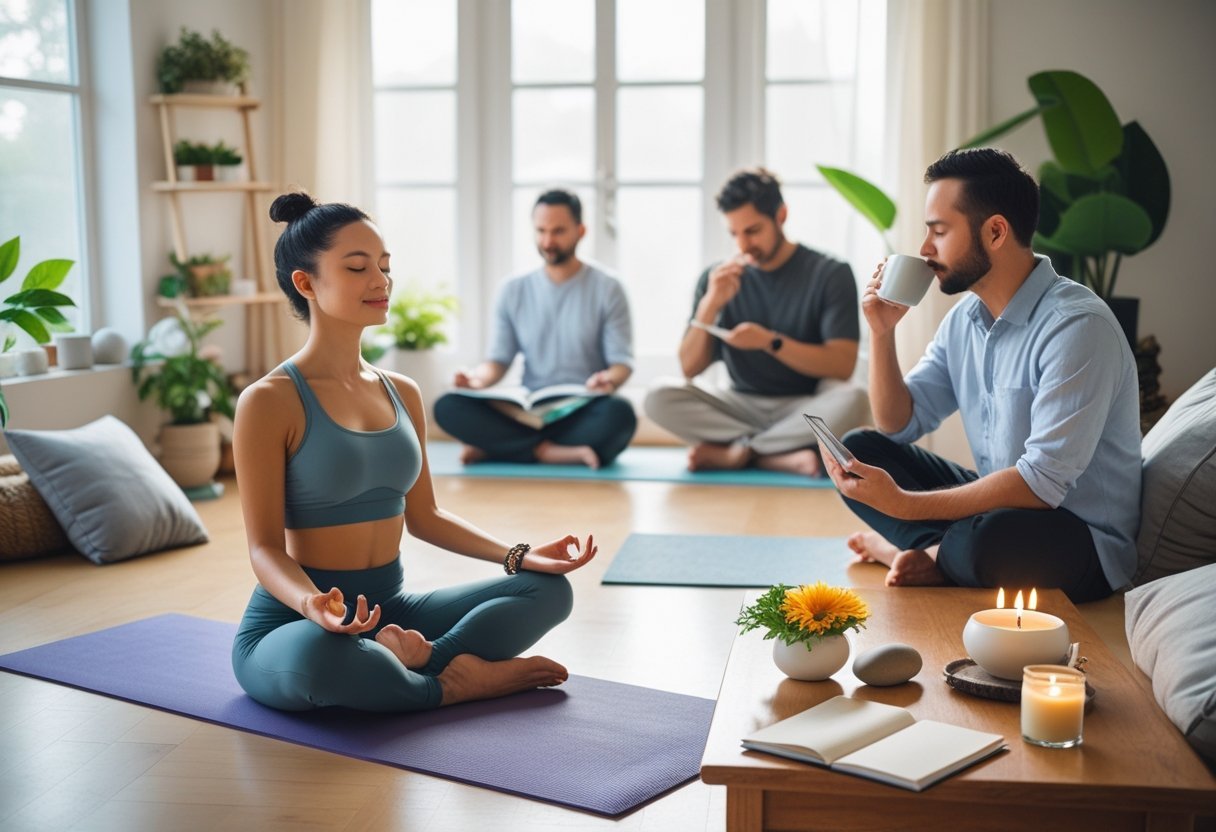
Mindfulness practices can fit into any schedule, reduce stress, and encourage a calm start to your day. There are tools for beginners and those with experience. Whether you’re looking for individual activities or something suited for a group, there are options available.
What are some quick mindfulness activities that can be done by adults?
You can try a one-minute breathing exercise by focusing fully on each inhalation and exhalation. Body scans, where you spend a few moments noticing sensations from head to toe, are another option. Mindful listening to ambient sounds or simply noticing the sensations in your hands or feet also works well.
How can one incorporate mindfulness into their everyday routine?
Bringing mindfulness into daily life can be as simple as paying attention to your senses during routine activities, such as feeling the warmth of the water while washing your hands or noticing each bite while eating breakfast. Using brief moments of waiting—like being in line or waiting for your computer to start—as a chance to check in with your breath can help make mindfulness a habit.
What are effective mindfulness exercises for reducing anxiety?
Deep breathing exercises, where you slowly inhale, hold, and exhale, can help reduce anxiety when practiced regularly. Grounding techniques, such as naming five things you see, four things you feel, and so on, bring your awareness away from anxious thoughts. Guided meditations focusing on body sensation or gratitude are also effective for calming the mind.
Can you suggest any mindfulness activities suitable for group settings?
Guided mindful listening, where each participant listens fully as others share, encourages group connection. A short group body scan or collective breathing exercises can bring focus. Pair activities like mirroring each other’s gentle movements or sharing one thing you’re grateful for can be done in groups, creating a sense of shared presence.
What steps can beginners take to establish a daily mindfulness practice?
Start with short, scheduled practices, such as three minutes of breathing before breakfast. Use reminders, such as phone alarms or Post-it notes, in commonly used spaces to prompt mindfulness. Gradually increase the duration once you feel comfortable, and consider using simple guided meditations or apps to help build consistency. Find beginner-friendly ideas in these 20 simple mindfulness practices.
What do the 3 C’s of mindfulness refer to and how are they applied?
The 3 C’s of mindfulness are curiosity, courage, and compassion. Curiosity means approaching your thoughts and experiences with interest and without judgment. Courage involves facing uncomfortable feelings. You must remain present. Compassion invites you to treat yourself and others kindly, even when mistakes are made. Applying these helps deepen your mindfulness practice daily.